The Public Accounts Committee of Parliament has extended by one month its inquiry into the controversial Amaryllis Hotel purchase by the Public Pensions Service Trust Fund. Our News Analyst WYCLIFFE NJIRAGOMA engages PAC chairperson BABA STEVEN MALONDERA on why the committee opted to reopen aspects of the probe, the issues that triggered the extension and allegations surrounding the inquiry process.
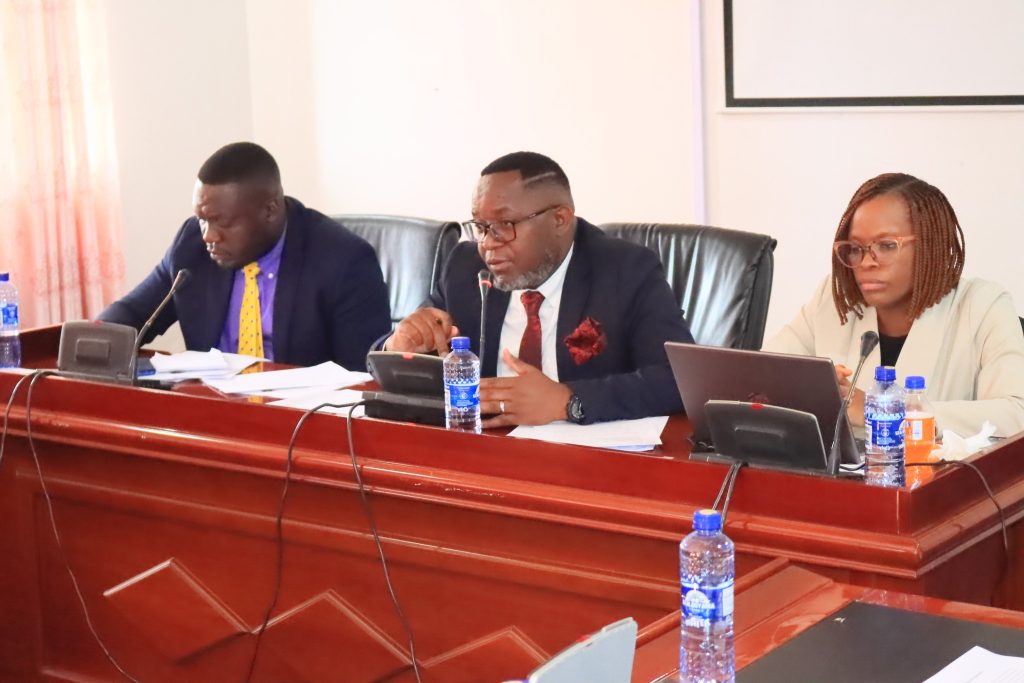
Why has the committee reopened the inquiry?
The decision was driven by emerging issues around the appearance and testimony of some key individuals, including the former Secretary to the President and Cabinet Colleen Zamba. She had been subpoenaed but there were concerns both within and outside the committee about whether all procedural and substantive aspects had been fully exhausted. After reviewing the documents and listening to different submissions, we felt it was necessary to reopen the process to allow additional clarification and give space to anyone who still wishes to communicate relevant information. The aim is to ensure completeness and procedural fairness so that no material issue is left unaddressed.
What specifically triggered the decision?
It was largely a combination of procedural gaps and new perspectives that emerged after the initial phases of the inquiry. Some stakeholders felt that certain lines of inquiry had not been fully tested through testimony, while others indicated they still had information they had not formally placed before the committee. In light of that, the committee concluded that reopening the inquiry would strengthen the credibility of its final report and reduce the risk of unresolved questions being raised after tabling.
Why was the extension set at one month?
The committee assessed what would be realistically sufficient time to conclude the remaining work without compromising quality. One month was considered adequate to recall necessary witnesses, receive additional submissions and finalise outstanding issues. It is also important to note that members were not receiving any allowances or financial incentives during the inquiry. The work was undertaken as part of parliamentary responsibility using normal sitting arrangements. We thus have to factor in administrative coordination within Parliament, especially since members are drawn from constituencies and cannot be continuously engaged without structured scheduling and logistical planning.
What do you say about allegations that committee members were influenced or even received money in relation to the report?
Those allegations are unfortunate and, frankly, misleading. If the public or even members of Parliament had seen and thoroughly engaged with the report we had prepared, they would clearly understand that there was no instance where the committee was influenced, compromised or financially induced. My conscience is very clear on that matter. I have also taken note of claims made by Mr Alexious Kamangila and I am still waiting for him to produce tangible evidence, including the alleged proof of payment he has referenced. Without evidence, such assertions remain baseless and damaging to the integrity of parliamentary oversight.
You have specifically mentioned Alexious Kamangila. What is your concern regarding his conduct?
My concern is that he, on several occasions, engaged in communications that went beyond the scope of the inquiry. Some of the questions and messages he sent were highly personal and, in my view, inappropriate for a parliamentary investigation. There were instances where he appeared to be trying to steer questioning in directions that targeted specific individuals, including the Attorney General, in a way that was not aligned with the committee’s mandate. I made it clear that PAC is not a forum for settling personal disputes or advancing individual grievances. I still retain records of those communications, which demonstrate the nature of the interactions.
What is your response to suggestions that certain external communications touched on how the report should be handled ahead of tabling?
Yes, there was direct communication in which Mr Kamangila, for instance, requested that the report should not be tabled in Parliament and further suggested that certain sections be reworked. At that point, the report had already been adopted by the committee, which is composed of 23 members, including myself as chair. I made it clear to him that I do not have any authority to alter, suppress or unilaterally influence the outcome of the committee’s report. The integrity of PAC’s processes depends on collective decision-making, not individual discretion and I communicated that position firmly.
What is your take on claims that you are acting politically, or under pressure?
I understand why such perceptions may arise in a politically charged environment, but I want to state clearly that I maintained strict neutrality throughout the inquiry. Even though I serve in a political role within the Malawi Congress Party, I deliberately stepped back from visible political engagements during the inquiry period to avoid any perception of bias. My focus was to ensure that the committee delivered a credible and evidence-based report that reflects what was presented before it, nothing more and nothing less.